

Table of Contents
A missing tooth has a way of making sandwiches feel… personal.
Missing teeth can affect more than just your smile. They can change how you eat, speak, and even how confident you feel day to day. When it comes to dentures vs implants, both options are designed to replace missing teeth, but they work in very different ways and offer very different experiences.
Choosing between dentures and implants depends on several factors, including your budget, bone health, lifestyle, and long-term dental goals. A comprehensive dental evaluation can help determine which option makes the most sense for you.
Let’s break it down before your next sandwich does.
What Are Dentures?
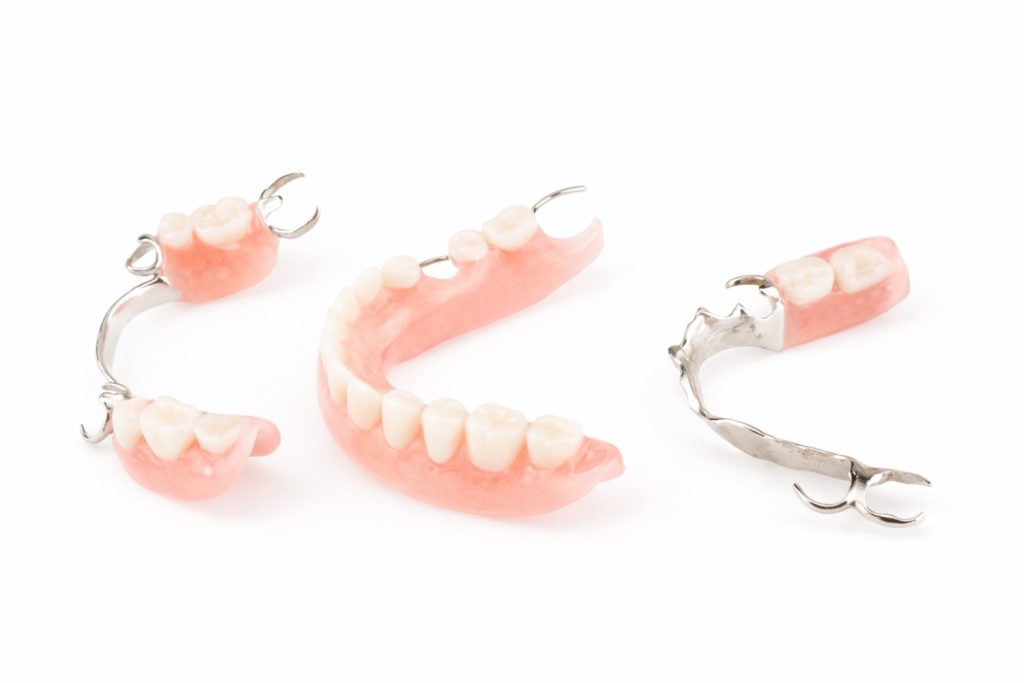
Dentures are removable prosthetic teeth designed to replace missing teeth and restore your ability to eat, speak, and smile with confidence. They’re a long-standing tooth replacement option and are still widely used today, especially for patients looking for a non-surgical solution.
There are two main types of dentures: Full dentures are used when all teeth in the upper or lower jaw are missing. Partial dentures replace several missing teeth and attach to the remaining natural teeth for support. Your dentist will recommend the option that best fits your oral health, lifestyle, and long-term needs.

PROS OF DENTURES
More affordable upfront than implants. Dentures generally cost less at the beginning compared to dental implants, making them a practical option for patients who want to restore their smile without a large initial investment. This lower upfront cost can be especially helpful if multiple teeth need to be replaced at once.
Non-surgical option. Because dentures don’t require surgery, they’re a good choice for patients who may not be candidates for implant procedures or who simply prefer a less invasive approach. This also means there’s no surgical recovery time involved.
Faster process (weeks, not months). The denture process is typically much quicker than implants. In many cases, patients can receive their dentures within a few weeks, while implants often require several months for healing and integration with the jawbone.
Can restore basic chewing and appearance quickly. Dentures can improve your ability to chew everyday foods and restore the look of a full smile in a relatively short time. For many patients, this quick functional and cosmetic improvement makes a noticeable difference in daily comfort and confidence.
CONS OF DENTURES
May shift or slip when eating or talking. Because dentures rest on the gums rather than being fixed in place, they can move slightly during meals or conversation. This can feel uncomfortable or awkward at first, especially when eating firmer foods or speaking for long periods.
Often require adhesives. Many denture wearers rely on dental adhesives to help keep their dentures secure throughout the day. While adhesives can improve stability, they add an extra step to your daily routine and may need to be reapplied.
Need periodic adjustments or replacement. Over time, your gums and jawbone naturally change shape. As this happens, dentures may loosen and require adjustments, relining, or eventual replacement to maintain a proper and comfortable fit.
Can contribute to bone loss over time. Dentures do not stimulate the jawbone the way natural teeth or dental implants do. Without that stimulation, bone loss can occur, which may affect facial structure and cause dentures to fit less securely over time.
Less natural feel compared to implants. While dentures can look very natural, they don’t always feel the same as permanent teeth. Some patients notice differences in bite strength, temperature sensitivity, or overall comfort compared to implant-supported options.
Dentures are often a good choice if you’re looking for a budget-friendly, quicker solution or if surgery isn’t an option.
What Are Dental Implants?
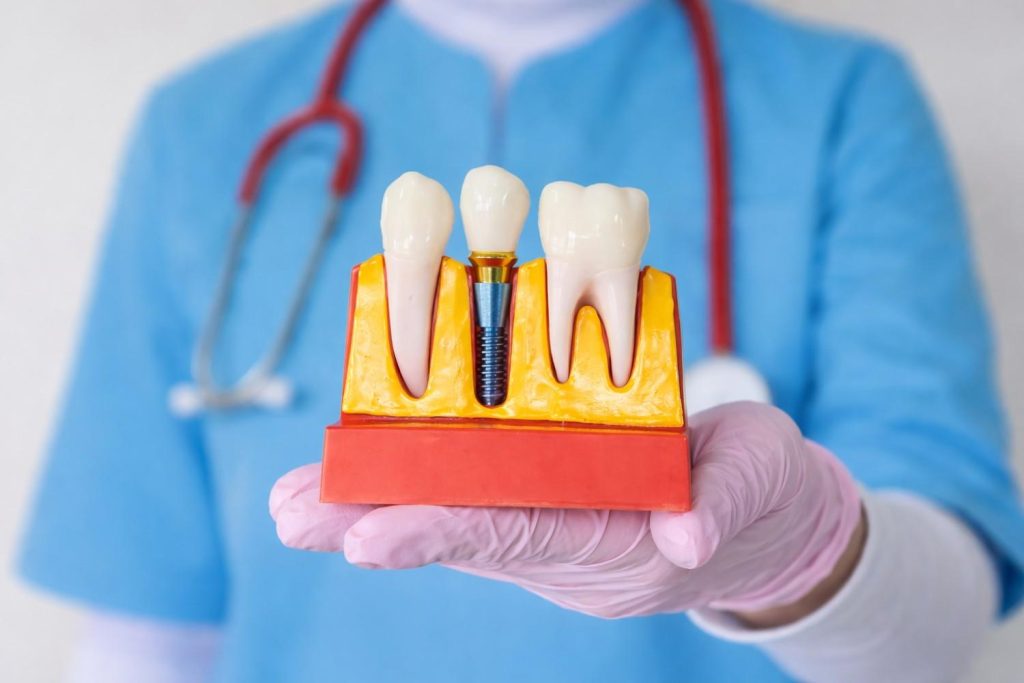
Dental implants are permanent tooth replacements designed to look, feel, and function like natural teeth. They work by placing a small titanium post into the jawbone, which acts as an artificial tooth root. Once healed, a custom dental crown is attached on top, creating a strong, stable replacement that blends seamlessly with your smile.
Dental implants are incredibly versatile. They can be used to replace a single missing tooth, multiple teeth, or even support a full set of replacement teeth through implant-supported dentures. Because implants are anchored directly into the jawbone, they provide exceptional stability and help maintain bone structure over time.
PROS OF DENTAL IMPLANTS
Long-term and permanent solution. Dental implants are designed to last for decades, and with proper care, many can last a lifetime. Unlike removable options, they become a fixed part of your mouth, making them a true long-term investment in your oral health.
Look and feel like natural teeth. Because implants are anchored into the jawbone, they closely mimic the feel and function of natural teeth. Most patients forget they even have an implant once it’s healed, which makes eating, speaking, and smiling feel completely normal again.
Preserve jawbone and facial structure. Implants stimulate the jawbone just like natural tooth roots. This helps prevent bone loss, which can protect your facial shape and reduce the sunken appearance that sometimes develops after tooth loss.
No slipping or adhesives. Implants stay securely in place, so there’s no movement while eating or talking. There’s also no need for adhesives, special soaking solutions, or removal at night.
CONS OF DENTAL IMPLANTS
Higher upfront cost. Dental implants typically cost more at the beginning than dentures. While many patients find the long-term value worthwhile, the initial investment can be a deciding factor for some.
Surgical procedure required. Placing an implant involves minor oral surgery. While it’s a routine and safe procedure for most patients, it may not be suitable for everyone, especially those with certain medical conditions.
Longer treatment timeline. The implant process takes time. After placement, the implant must heal and integrate with the jawbone before the final crown is attached. This means the full process can take several months from start to finish.
Not everyone is an immediate candidate. Adequate bone density is needed to support an implant. Some patients may require additional procedures, such as bone grafting, before implants can be placed.
Implants are ideal if you want a long-term, low-maintenance solution that feels as close to natural teeth as possible.
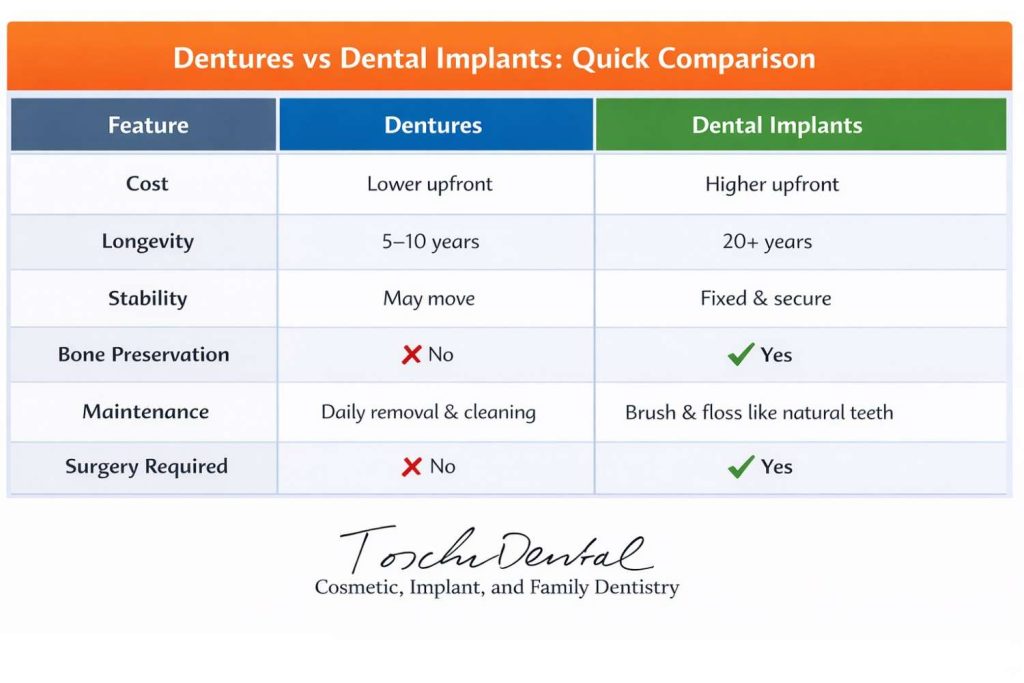
Dentures vs Implants: Quick Comparison
Which Option Is Best for You?
There’s no one-size-fits-all answer when it comes to replacing missing teeth. The right choice depends on several personal factors, including your overall oral health, bone density, budget, comfort with surgery, and what you expect from your smile in the long run. What works perfectly for one patient may not be the best fit for another.
Some patients want a faster, non-surgical solution, while others are focused on long-term stability and preserving jawbone health. In many cases, a hybrid option such as implant-supported dentures offers a balance between affordability and improved comfort, combining the security of implants with the coverage of dentures.
Research published by the National Institutes of Health (NIH) shows that dental implants can help reduce jawbone resorption and improve long-term oral function compared to traditional removable dentures, supporting their role in maintaining bone health and stability over time
The best way to decide is through a professional evaluation that looks at your unique dental needs, not just the missing tooth. At Toschi Dental, the team offers personalized consultations and advanced tooth replacement services to help you choose the solution that fits your lifestyle and goals. Whether you’re considering dentures, dental implants, or a combination of both, a customized treatment plan can make all the difference in restoring your smile with confidence.

Frequently Asked Questions: Dentures vs Implants
1. Are dentures better than dental implants?
Dental implants are often considered better for long-term use because they are fixed in place, feel more natural, and help preserve jawbone health. Dentures can still be a good option for patients who want a more affordable or non-surgical solution.
2. How long do dentures and dental implants last?
Dentures typically last 5–10 years before needing replacement or adjustment. Dental implants, with proper care, can last 20 years or longer, and many last a lifetime.
3. Do dental implants hurt?
Most patients report minimal discomfort during implant surgery. The procedure is done under local anesthesia, and post-treatment soreness is usually manageable with over-the-counter pain medication.
4. Can I switch from dentures to dental implants later?
Yes. Many patients start with dentures and later transition to dental implants or implant-supported dentures once they are ready financially or medically. A dental exam is needed to evaluate bone health.
5. Who is not a good candidate for dental implants?
Patients with severe bone loss, uncontrolled diabetes, or certain medical conditions may need additional treatment or may not be ideal candidates. A consultation with your dentist will determine the safest and most effective option.