

Table of Contents
Dental implants vs. dentures is one of the most common comparisons people face when replacing missing teeth.
Missing teeth can affect more than just your smile. They can make it harder to eat, speak clearly, and feel confident in everyday life. If you are exploring tooth replacement options, two of the most common solutions are dental implants and dentures. Both can restore your smile, but the right choice depends on your needs, budget, oral health, and long-term goals.
This guide explains the difference between dental implants and dentures so you can make the best decision for your smile.
What Are Dental Implants?
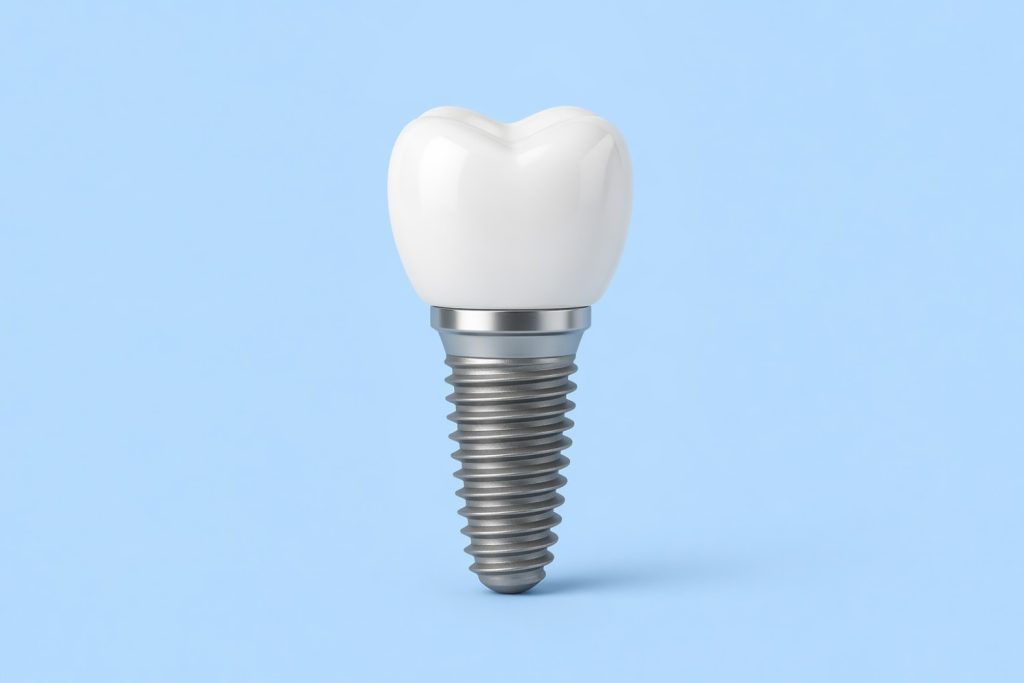
Dental implants are permanent tooth replacements that are placed into the jawbone. A titanium post acts like an artificial tooth root, creating a strong and secure foundation for the replacement tooth. Once the implant has healed and fused with the bone, a custom crown is attached on top to look and function like a natural tooth.
Dental implants are designed to restore both appearance and function, allowing you to eat, speak, and smile with confidence. They are popular because they feel stable, look natural, and help preserve jawbone health by preventing bone loss that can happen after tooth loss. With proper care, dental implants can last for many years and provide a long-term solution for missing teeth.
What Are Dentures?
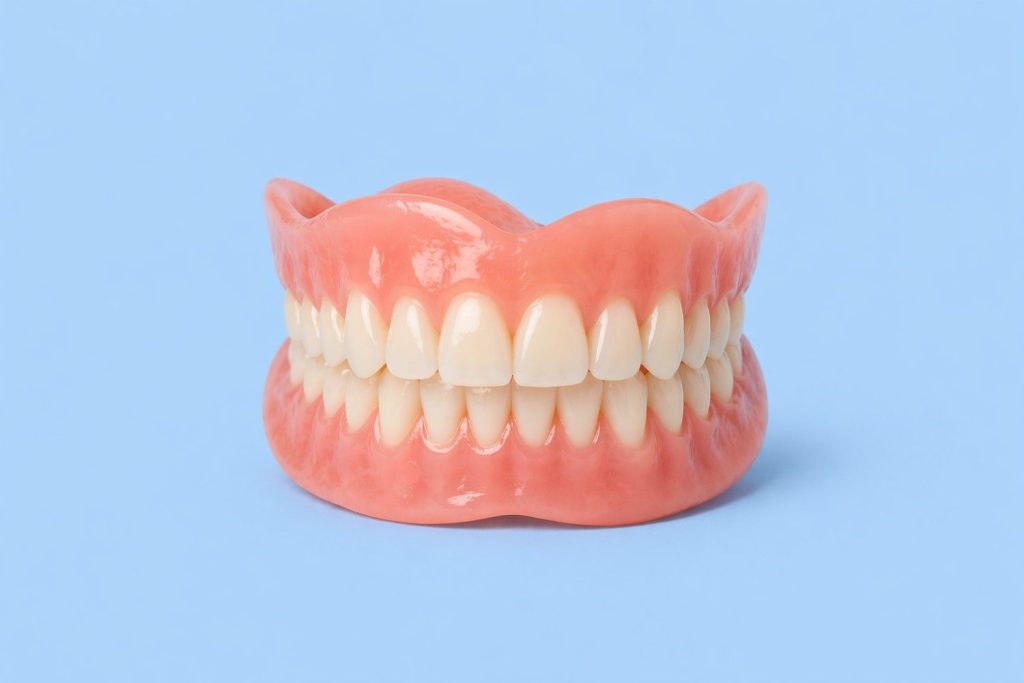
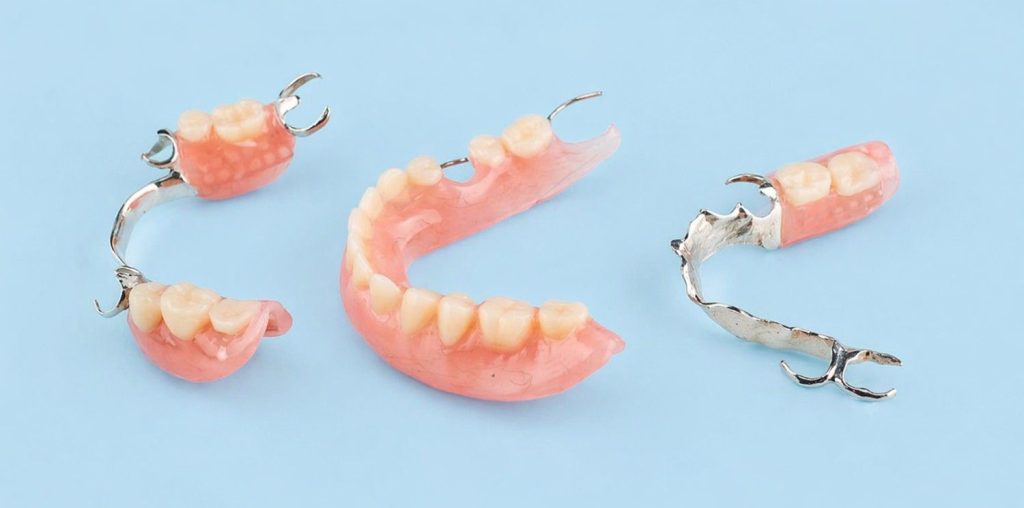
Dentures are removable appliances used to replace multiple missing teeth or a full arch of teeth. They are custom-made to fit your mouth, helping restore both the appearance of your smile and your ability to eat and speak more comfortably. Modern dentures are designed to look more natural and fit better than older styles, giving many patients renewed confidence.
There are two main types:
1. Full dentures – replace all teeth in the upper or lower arch
2. Partial dentures – replace several missing teeth while using remaining natural teeth for support
Dentures are often a faster and more affordable option than implants. They can also be a practical solution for patients who have experienced significant tooth loss or may not have enough jawbone support for dental implants. With regular adjustments and proper care, dentures can provide a reliable way to restore your smile.
Pros and Cons of Dental Implants vs. Dentures
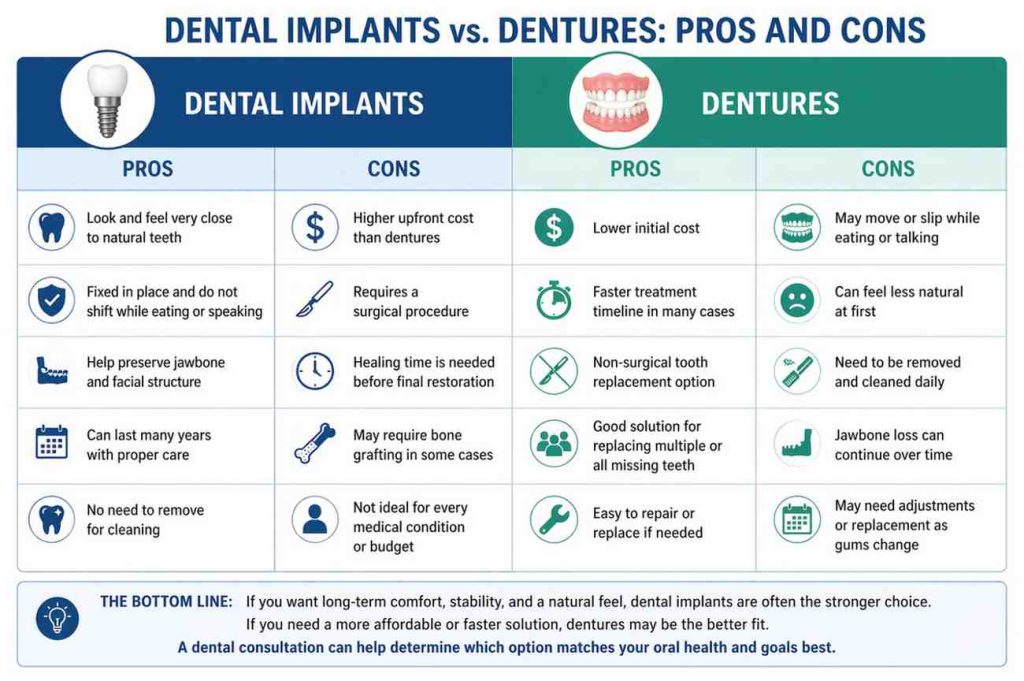
Choosing between dental implants and dentures often comes down to balancing benefits and trade-offs. Understanding the pros and cons of each option can help you make a more confident decision.
Dental Implants Pros
• Look and feel very close to natural teeth
• Fixed in place and do not shift while eating or speaking
• Help preserve jawbone and facial structure
• Can last many years with proper care
• No need to remove for cleaning
Dental Implants Cons
• Higher upfront cost than dentures
• Requires a surgical procedure
• Healing time is needed before final restoration
• May require bone grafting in some cases
• Not ideal for every medical condition or budget
Dentures Pros
• Lower initial cost
• Faster treatment timeline in many cases
• Non-surgical tooth replacement option
• Good solution for replacing multiple or all missing teeth
• Easy to repair or replace if needed
Dentures Cons
• May move or slip while eating or talking
• Can feel less natural at first
• Need to be removed and cleaned daily
• Jawbone loss can continue over time
• May need adjustments or replacement as gums change
Which Option Lasts Longer?
Dental implants are designed to be a long-term tooth replacement solution and can last many years or even decades with proper care. Because the implant post is placed into the jawbone, it becomes stable and functions much like a natural tooth root. According to research from the National Library of Medicine, studies have shown strong long-term success rates, with one systematic review reporting an estimated 10-year implant survival rate of about 96.4%.
Dentures, while durable, typically need more maintenance over time. They may require relining, adjustments, repairs, or full replacement as the gums and jawbone naturally change shape after tooth loss. A systematic review published in The Journal of Prosthetic Dentistry found that the average longevity of complete dentures is around 10 years, though this can vary depending on fit, care, and daily use.
In general, dental implants tend to last longer than dentures and offer greater long-term stability. However, dentures can still be an excellent option for patients looking for a more affordable and non-surgical way to restore their smile.
Who Is a Good Candidate for Dental Implants?
Dental implants may be ideal if you:
• Want a permanent solution
• Have healthy gums
• Have enough jawbone support
• Want the closest option to natural teeth
• Prefer not to remove teeth appliances daily
Who Is a Good Candidate for Dentures?
Dentures may be a better option if you:
• Need a lower-cost solution
• Need to replace many teeth quickly
• Have bone loss that limits implant placement
• Prefer a non-surgical option
How to Choose the Best Option for You
There is no one-size-fits-all answer when choosing between dental implants and dentures. The best option depends on several factors, including your oral health, budget, lifestyle, number of missing teeth, and long-term goals. Some patients choose implants for their durability, comfort, and natural feel, while others prefer dentures for their affordability and convenience.
In some cases, implant-supported dentures offer the best of both worlds by combining the stability of implants with the ability to replace a full arch of teeth. This option can provide better chewing ability, improved comfort, and more confidence compared to traditional removable dentures.
It is also important to consider your jawbone health, as dental implants require enough bone support for successful placement. Dentures may be recommended for patients who want a non-surgical solution or need a faster treatment option.
The best way to decide is through a professional dental exam and personalized treatment plan. A dentist can evaluate your smile, discuss your needs, and recommend the most effective solution to restore your teeth and confidence.
Restore Your Smile with Toschi Dental in San Jose
If you are deciding between dental implants and dentures, the team at Toschi Dental is here to help. Our experienced dentists provide personalized tooth replacement solutions designed around your comfort, budget, and long-term oral health goals.
We offer advanced dental implant treatment, custom dentures, and full smile restoration options in a caring and modern environment. Whether you are missing one tooth or many teeth, we can help you regain confidence and function with a treatment plan that fits your lifestyle.
Call Toschi Dental today to schedule your consultation and discover the best option for your smile.

Frequently Asked Questions About Dental Implants vs. Dentures
1. Are dental implants better than dentures?
Implants are often better for comfort, stability, and bone health, while dentures are more affordable.
2. How long do dental implants last?
Dental implants can last many years or even decades with proper care.
3. How long do dentures last?
Dentures usually last around 5 to 10 years depending on fit and care.
4. Are dental implants painful?
Most patients feel mild discomfort after the procedure, which improves quickly.
5. Are dentures uncomfortable?
They may feel awkward at first, but most people adjust over time.
6. Can dental implants replace all teeth?
Yes, implants can replace one tooth or support full-arch restorations.
7. Can dentures look natural?
Yes, modern dentures can look very natural when custom-made.
8. What is cheaper, dental implants or dentures?
Dentures usually cost less upfront than implants.
9. Who is not a good candidate for dental implants?
People with severe bone loss or gum disease may need treatment first.
10. How do I know if I need implants or dentures?
A dentist can recommend the best option after an exam.