
Table of Contents
If your tooth could talk, it might ask for reinforcement instead of removal.
A damaged or weakened tooth does not always need to be removed. In many cases, a dental crown can strengthen the tooth, restore normal function, and improve its appearance while protecting your natural tooth for years. Dental crowns are one of the most common treatments in modern dentistry, yet many people still have questions about how they work, when they are needed, and which type is right for them.
In this guide, we will explain what a dental crown is, go over the different types of dental crowns, and discuss the pros and cons of each option so you can make a confident decision about your oral health.
What Is a Dental Crown?
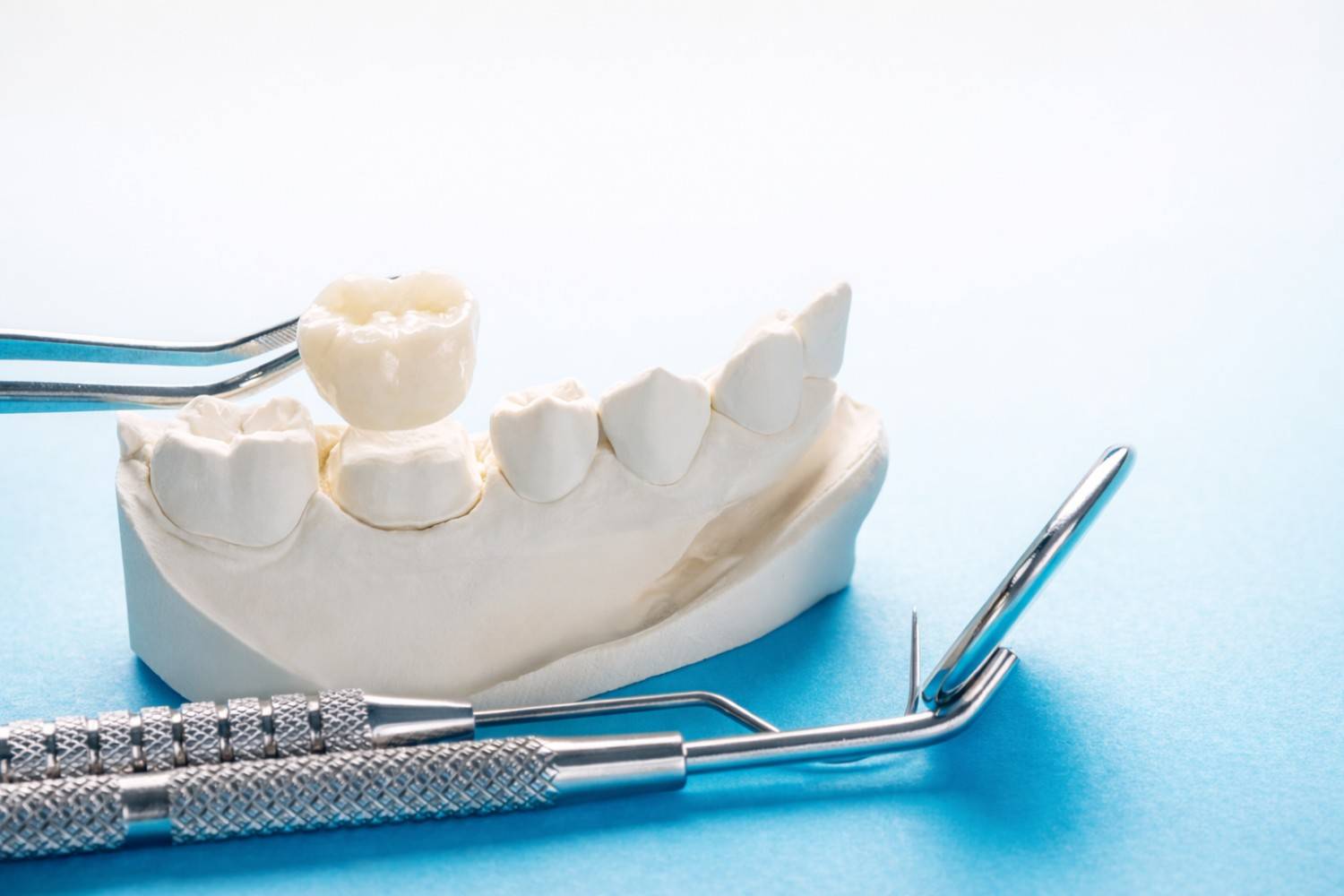
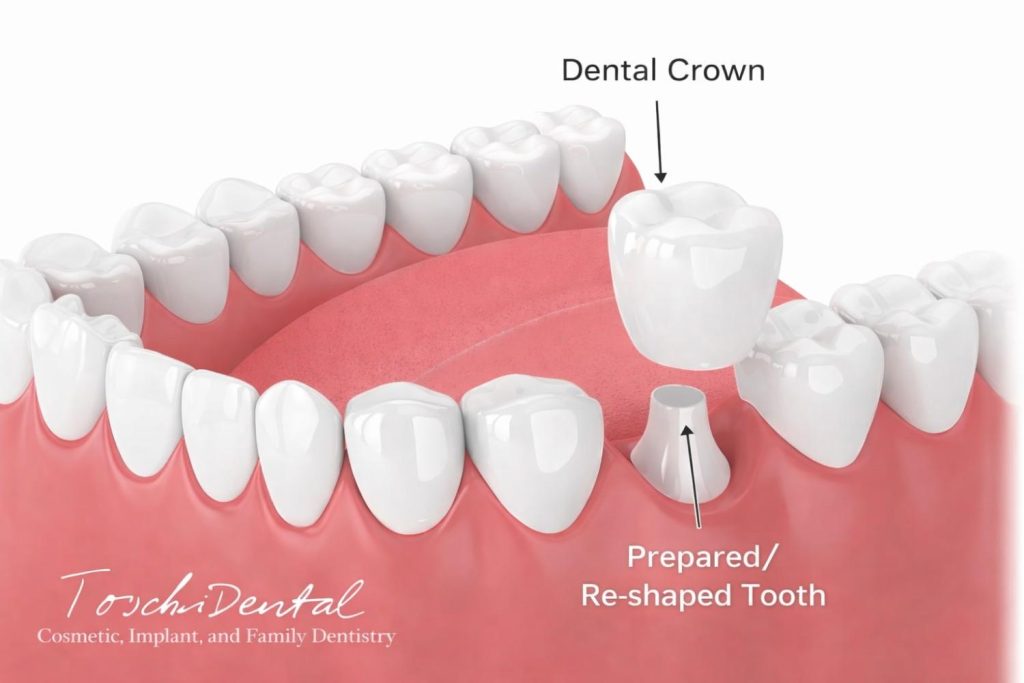
A dental crown is a custom-made cap that completely covers a tooth. It restores the tooth’s shape, size, strength, and appearance while protecting it from further damage. Once placed, a crown functions like a natural tooth, allowing you to chew, speak, and smile comfortably.
Dental crowns are commonly recommended when a tooth is too damaged to be fixed with a filling but still healthy enough to save. They are also used after root canal treatment, to support large fillings, or to improve the appearance of discolored or misshapen teeth.
Types of Dental Crowns
Dental crowns are not one-size-fits-all. Today’s dentistry offers several crown options, each designed to meet different needs. The right choice depends on where the crown will be placed, how much pressure it needs to handle, how important appearance is to you, and your budget.
Understanding the differences can help you feel more confident when discussing treatment options with your dentist.
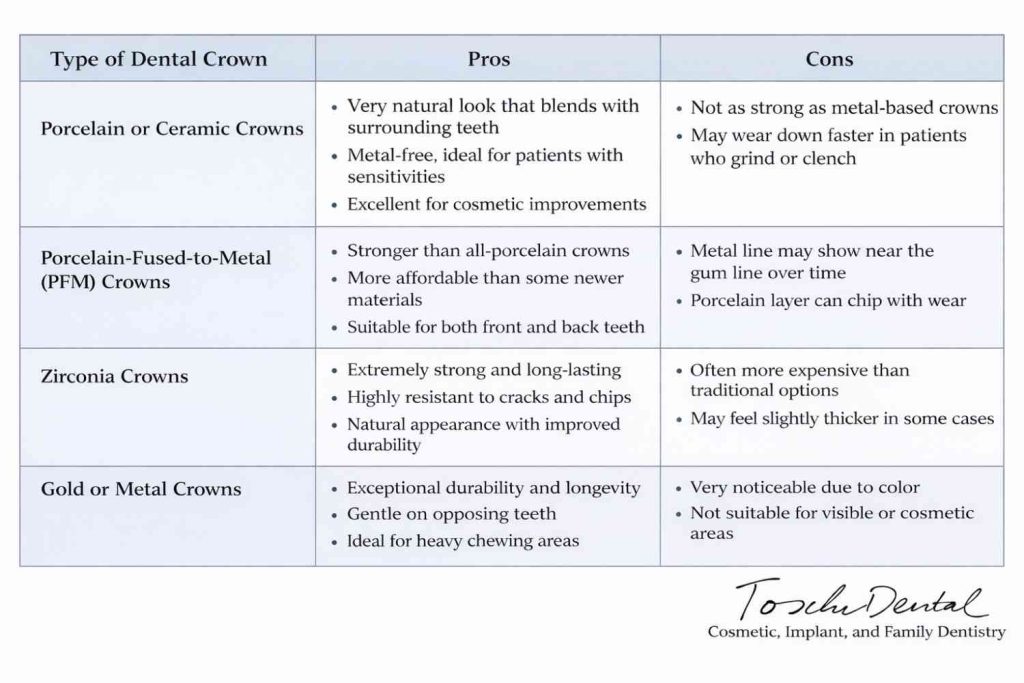
1. Porcelain or Ceramic Crowns
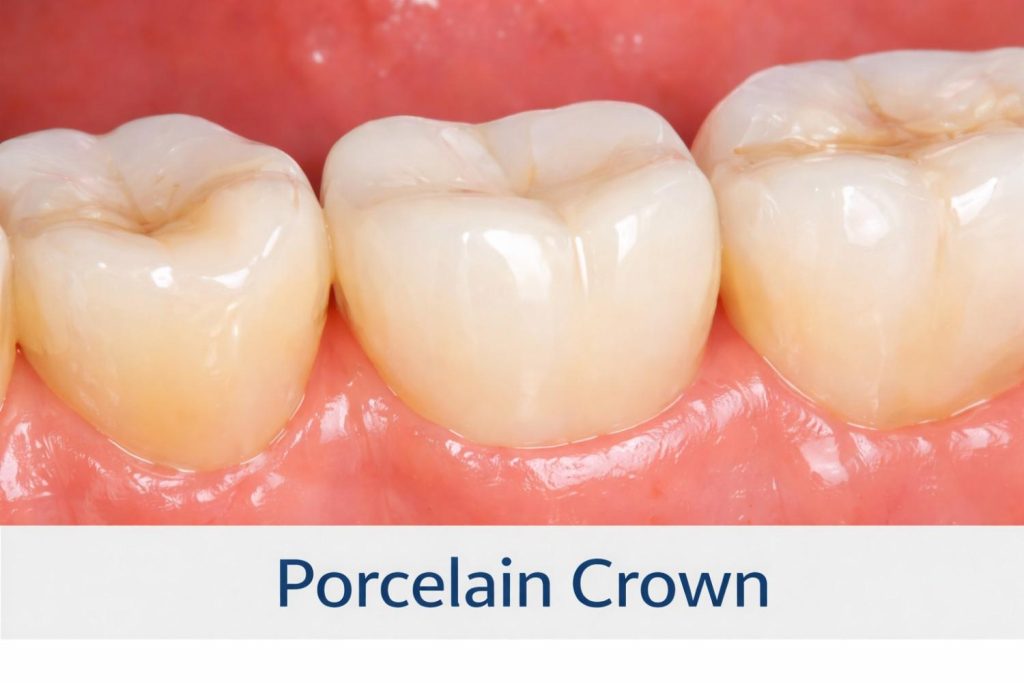
Porcelain and ceramic crowns are chosen because they look very similar to natural teeth. They reflect light like real enamel, which helps them blend in naturally with your smile.
These crowns are often used on front teeth or other visible areas where appearance is especially important.
Pros
- Very natural look that blends with surrounding teeth
- Metal-free, making them ideal for patients with sensitivities
- Excellent for cosmetic improvements
Cons
- Not as strong as metal-based crowns
- May wear down faster in patients who grind or clench their teeth
2. Porcelain-Fused-to-Metal (PFM) Crowns
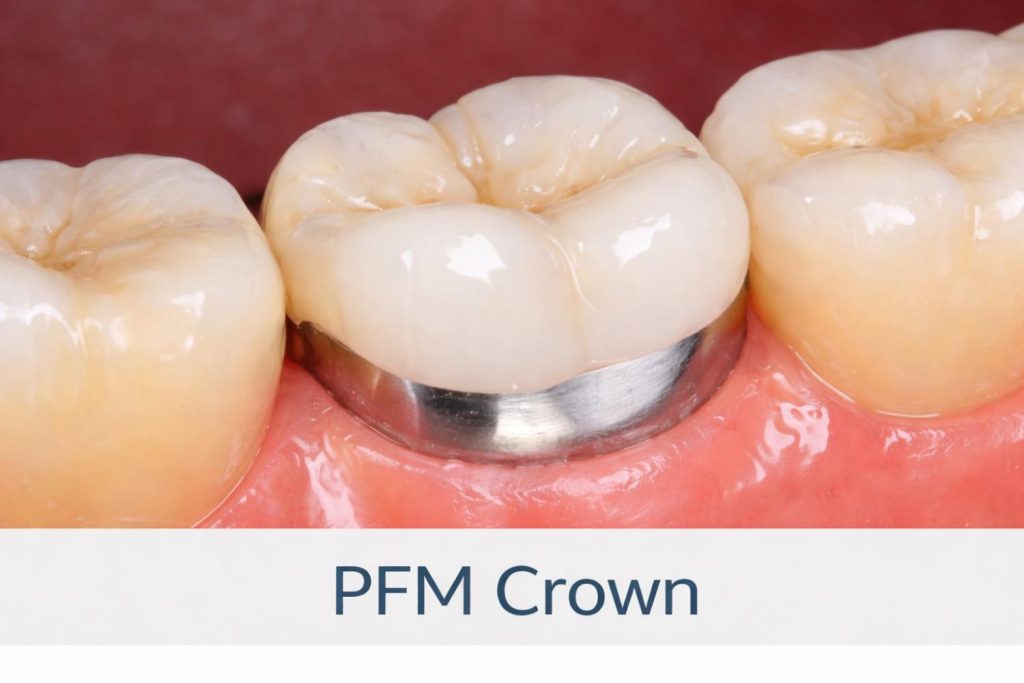
PFM crowns are made with a strong metal base covered by tooth-colored porcelain. This design gives them both durability and a natural look, which is why they have been used successfully for many years.
They are a good option when you need a crown that is both strong and good-looking.
Pros
- Stronger than all-porcelain crowns
- More affordable than some newer materials
- Suitable for both front and back teeth
Cons
- A thin metal line may become visible near the gum line over time
- The porcelain layer can chip with wear
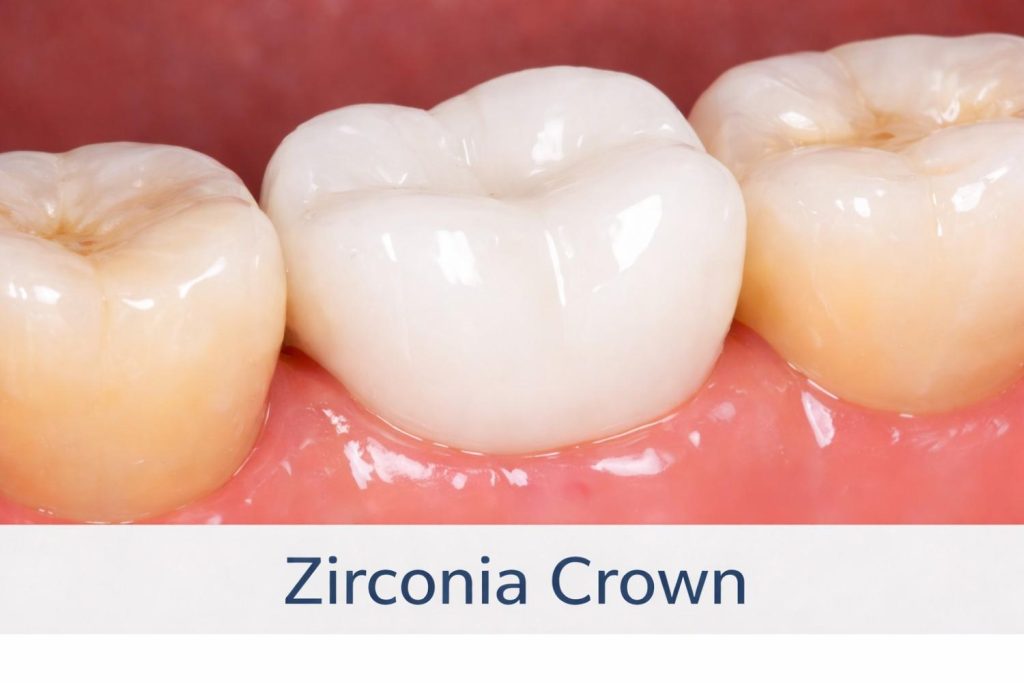
3. Zirconia Crowns
Zirconia crowns are popular because they are very strong and natural-looking. They are made from a tough ceramic material that can handle heavy chewing without breaking.
Because of their strength and clean appearance, zirconia crowns are a great choice for both front and back teeth.
Pros
- Extremely strong and long-lasting
- Highly resistant to cracks and chips
- Natural appearance with improved durability
Cons
- Often more expensive than traditional options
- May feel slightly thicker in certain cases
4. Gold or Metal Crowns
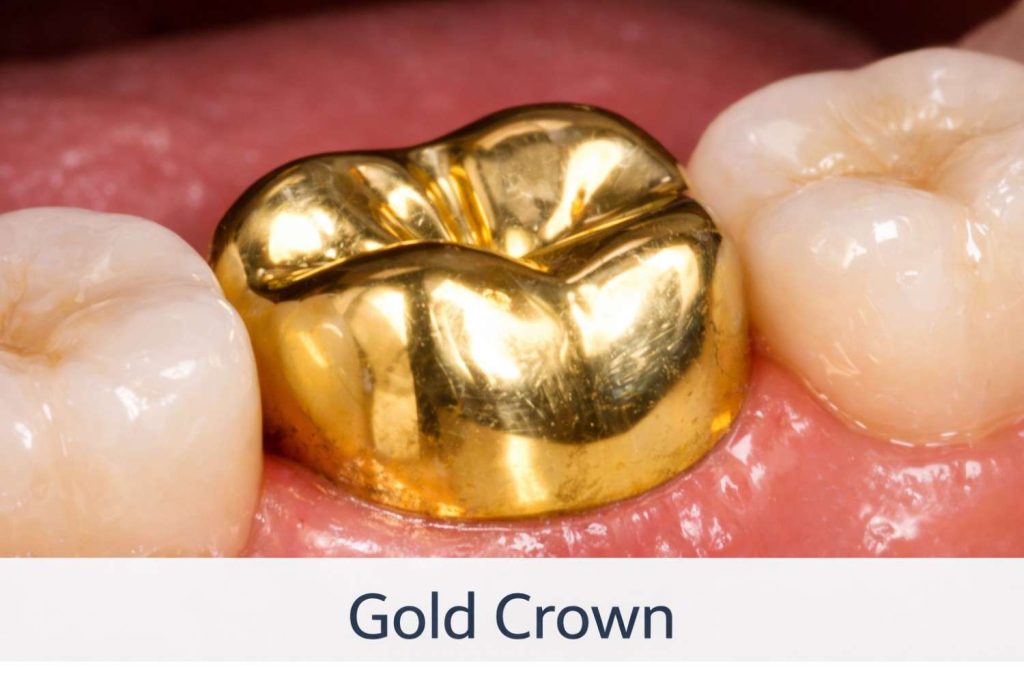
Gold and metal alloy crowns have been used for many years because they are very strong and long-lasting. Even though they are not chosen for looks, they hold up extremely well over time.
These crowns are usually recommended for back teeth (molars) that do most of the chewing.
Pros
- Exceptional durability and longevity
- Gentle on opposing teeth
- Ideal for areas that experience strong bite forces
Cons
- Very noticeable due to their color
- Not suitable for visible or cosmetic areas
Advantages of Dental Crowns
Dental crowns offer more than just a simple fix for damaged teeth. They help restore strength, comfort, and confidence while protecting your long-term oral health.
1. Tooth Protection
When a tooth is weakened by decay, cracks, or a large filling, it can break easily. A dental crown covers the entire tooth and protects it from further damage. This helps keep your natural tooth strong and prevents bigger problems later.
2. Restored Function
A damaged tooth can make eating uncomfortable and may affect how you speak. A crown restores the tooth’s shape and strength, allowing you to chew normally and speak clearly again without pain or sensitivity.
3. Natural Appearance
Dental crowns are made to look like natural teeth. They are matched to the color and shape of your smile, so whether the crown is on a front or back tooth, it blends in and looks natural.
4. Long Term Durability
Crowns are made from strong materials designed to handle daily biting and chewing. With good oral care and regular dental visits, a crown can last many years, making it a dependable solution.
5. Improved Confidence
A damaged or missing tooth can make you feel self conscious about your smile. A dental crown restores the look of the tooth, helping you feel more confident when smiling, talking, and socializing.
Research supports the long-term benefits of dental crowns in protecting and restoring damaged teeth. The American Dental Association notes that crowns help strengthen teeth that can no longer be supported by fillings alone, reducing the risk of fractures and further damage. Clinical reviews published by the National Institutes of Health also show that modern dental crowns have high success rates and long-term durability when paired with proper oral care and regular dental visits.
Disadvantages of Dental Crowns
Dental crowns are a reliable and effective treatment, but like any dental procedure, there are a few things patients should understand before moving forward. Knowing what to expect can help you feel more comfortable and confident about your decision.
1. Tooth Reshaping Is Required
A small amount of natural tooth must be removed so the crown can fit properly.
2. Higher Cost Than Fillings
Crowns usually cost more than fillings because they are custom made and more durable.
3. Temporary Sensitivity
Some patients may feel mild sensitivity after placement, which usually goes away on its own.
4. May Need Replacement Over Time
Crowns can wear down or loosen over many years and may need to be replaced.
Your dentist will always review these factors and recommend a crown only when it is the best option for your long-term oral health.
Dental Crown Services at Toschi Dental
At Toschi Dental, dental crowns are designed with precision, comfort, and long-term results in mind. Our experienced dentists use advanced technology to ensure crowns fit naturally, function properly, and complement your smile.
Patients often explore our general dentistry services to maintain overall oral health, while others may combine crowns with cosmetic dentistry treatments to enhance their smile. For teeth that are beyond repair, our team can also discuss restorative options such as dental implants to restore both function and aesthetics.
Our goal is always to save your natural teeth whenever possible and provide treatment plans tailored to your needs.Contact Toschi Dental today to schedule a consultation and take the next step toward a healthier, more confident smile.
Frequently Asked Questions About Dental Crowns
How long do dental crowns last?
Dental crowns typically last between 10 and 15 years, and sometimes longer with good oral hygiene and regular dental visits.
Can dental crowns cause cancer?
No. Dental crowns are made from materials that are considered safe and biocompatible. There is no scientific evidence linking dental crowns to cancer.
Are dental crowns painful?
The procedure is generally not painful. Local anesthesia is used during preparation, and mild sensitivity afterward is temporary.
How long does it take to get a dental crown?
Most crowns require two visits over one to two weeks. Some cases may qualify for same-day crowns depending on the technology used.
When is a dental crown needed?
A crown is needed when a tooth is cracked, weakened, heavily decayed, or after a root canal to protect and restore it.
Are dental crowns safe?
Yes. Dental crowns are widely used and considered safe when placed by a qualified dentist using approved materials.
Can a dental crown be replaced?
Yes. If a crown becomes damaged, worn, or loose, it can be safely removed and replaced with a new one.
How much is a dental crown?
The cost of a dental crown typically ranges from $900 to $1,500 per tooth, depending on the material and your dental needs. Insurance may cover part of the cost if the crown is medically necessary.