
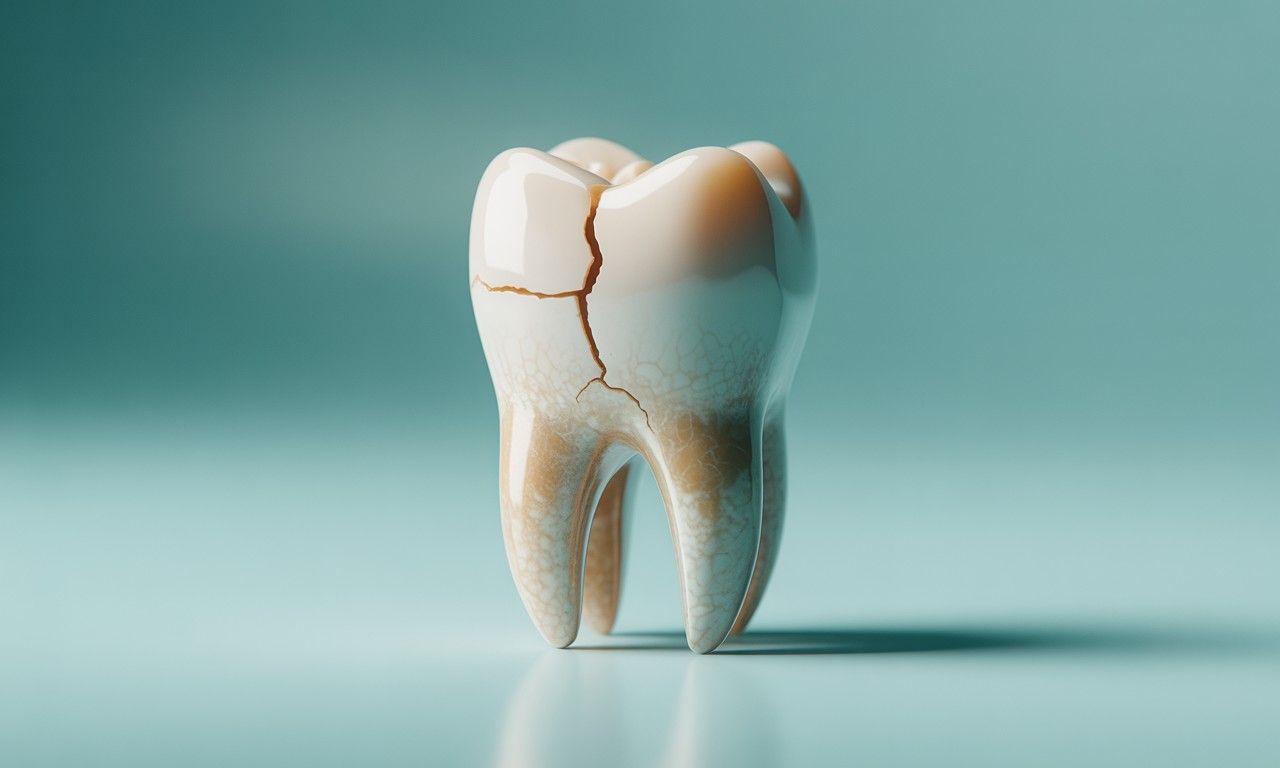
A cracked tooth might not always cause pain—but that doesn’t mean it’s harmless. Even small cracks in your enamel can lead to serious oral health complications if ignored. Whether caused by biting something hard, grinding your teeth, or old dental work failing, cracks create an open door for bacteria and further damage. In this article, we’ll explain why even a painless crack deserves attention and how your dentist can help protect your tooth before it’s too late.
Jump To:
TLDR Quick Guide
- A cracked tooth can exist without symptoms but still pose serious risks
- Untreated cracks may lead to infection, decay, or full tooth loss
- Cracks can deepen or spread with chewing pressure
- Early dental evaluation helps prevent costly treatment later
- Many cracks can be repaired with bonding, crowns, or root canals
What Is a Cracked Tooth?
A cracked tooth refers to any split, line, or fracture in the structure of your tooth. Some cracks are visible and painful; others are hidden and symptomless—at least at first.
Common types include:
- Craze lines: Tiny surface cracks in the enamel (usually harmless)
- Fractured cusp: A piece of the chewing surface breaks off
- Cracked tooth: The crack extends vertically toward the root
- Split tooth: A severe crack that splits the tooth in two
- Vertical root fracture: Starts at the root and travels upward
Only a dental exam (often with imaging) can determine the extent and risk of a crack.
Why a Cracked Tooth Can Be Dangerous
Hidden Infection Risks
Cracks allow bacteria to penetrate the inner layers of the tooth, including the pulp and root. This can lead to:
- Inflammation or abscess
- Nerve damage
- Bone loss near the root tip
Often, pain doesn’t appear until the infection is advanced.
Structural Weakness
Even a small crack weakens the tooth. Over time, pressure from chewing can cause:
- The crack to deepen
- A piece of the tooth to break off
- The entire tooth to split or become non-restorable
Tooth Sensitivity or Bite Changes
As the crack worsens, you may experience:
- Sensitivity to cold, heat, or sweets
- Sharp pain when biting or chewing
- Discomfort that comes and goes unpredictably
By the time these symptoms show up, treatment may be more complex.
How Dentists Treat a Cracked Tooth
Treatment depends on the type and severity of the crack:
| Crack Type | Treatment Option |
| Minor enamel crack | Smoothing or bonding |
| Fractured cusp | Dental crown or onlay |
| Cracked tooth (to pulp) | Root canal + crown |
| Split tooth | Extraction + possible implant or bridge |
| Vertical root fracture | Often extraction is required |
Early detection means more options and less invasive procedures.
What to Do If You Suspect a Crack
- Avoid chewing on that side of your mouth
- Stick to soft foods
- Rinse with warm salt water to reduce bacteria
- Contact your dentist immediately—even if there’s no pain
Delaying treatment increases the risk of irreversible damage.
Key Takeaways
- A cracked tooth may not hurt initially but still poses serious risks
- Bacteria can enter through cracks and cause infection or decay
- Chewing pressure can worsen cracks over time
- Early diagnosis allows for conservative, tooth-saving treatments
- Don’t ignore a painless crack—have it evaluated promptly
FAQs
Can a cracked tooth heal on its own?
No. Once enamel is cracked, it cannot repair itself. Only professional treatment can restore strength and prevent further damage.
How do I know if I have a cracked tooth?
You might not—many cracks are symptomless. A dental exam with X-rays or 3D imaging is often required.
Is it okay to wait until it hurts?
No. Waiting allows the problem to worsen and may limit your treatment options. Early intervention is best.
Will I always need a root canal for a cracked tooth?
Not always. If the crack doesn’t reach the pulp, a crown or bonding may be enough. Your dentist will evaluate the severity.
Can I chew normally after treatment?
Yes—after the tooth is stabilized or restored, you’ll be able to chew comfortably again. Avoid very hard foods to prevent future cracks.