
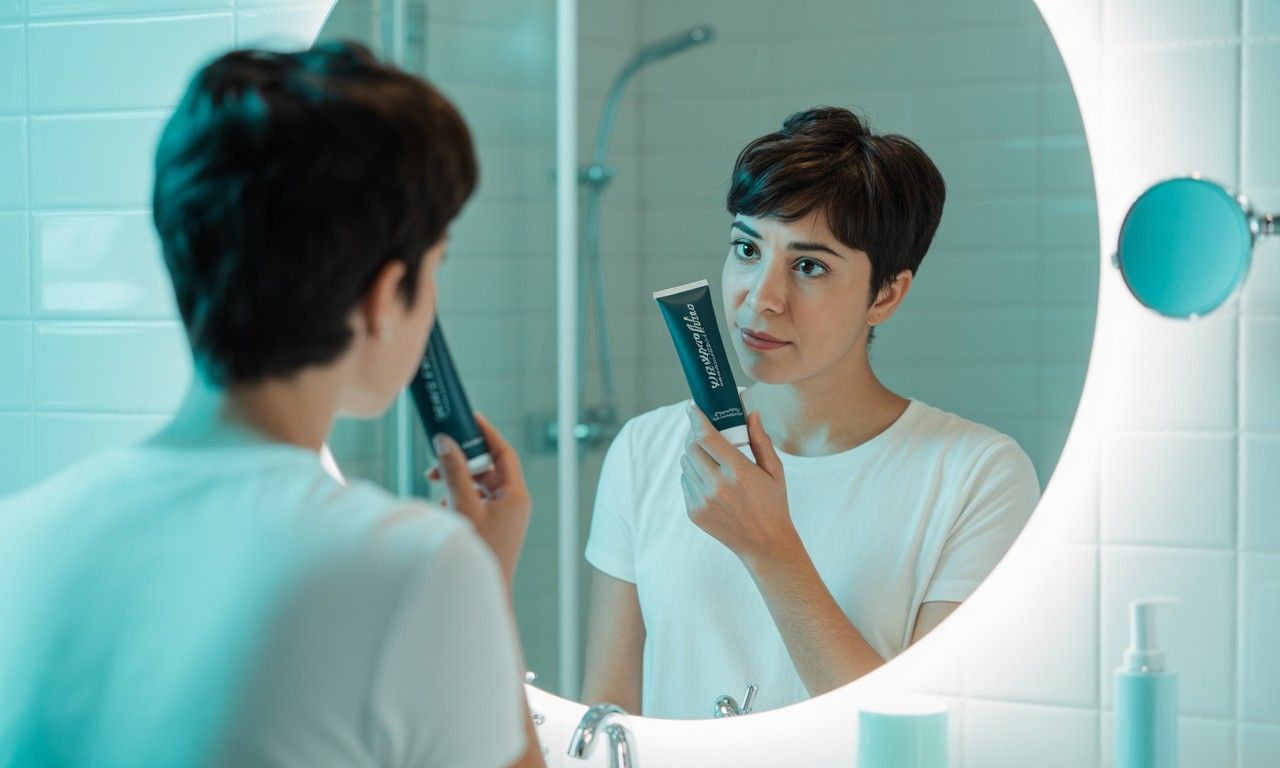
Charcoal toothpaste has exploded in popularity—promoted by influencers and marketed as a natural way to achieve a whiter smile. But behind the sleek black aesthetic and viral videos lies a deeper question: Is charcoal toothpaste safe or just another trend with more risk than reward? Let’s break down the science, the marketing, and what your dentist really wants you to know before you brush black.
Jump To:
TLDR Quick Guide
- Charcoal toothpaste may remove surface stains but doesn’t whiten teeth deeply
- It can be abrasive and wear away enamel over time
- Most products lack fluoride, increasing cavity risk
- No major dental associations recommend it
- Dentists advise using proven, ADA-approved whitening options
What Is Charcoal Toothpaste?
Charcoal toothpaste contains activated charcoal, a highly porous form of carbon made by heating natural materials like wood, coconut shells, or peat. In theory, the charcoal binds to plaque, stains, and toxins, lifting them from the surface of your teeth.
Many brands advertise charcoal toothpaste as:
- Natural
- Fluoride-free
- Detoxifying
- Whitening
However, very few are approved by dental organizations, and the evidence behind their benefits is limited at best.
The Risks of Using Charcoal Toothpaste
1. It’s Abrasive
Charcoal can be too gritty for enamel, especially with frequent use. Over time, this may cause:
- Enamel erosion
- Tooth sensitivity
- Yellowing (as dentin becomes exposed)
- Increased risk of decay
Once enamel is gone, it doesn’t grow back.
2. Most Are Fluoride-Free
Fluoride strengthens enamel and helps prevent cavities. Many charcoal toothpaste brands leave it out, which can:
- Weaken enamel over time
- Leave you more vulnerable to decay
- Make your oral hygiene less effective overall
3. No Proven Whitening Below the Surface
Charcoal toothpaste may remove surface stains (extrinsic discoloration), but it does not:
- Whiten enamel
- Lighten intrinsic stains
- Match the results of peroxide-based whitening agents
The “whitening” effect is largely cosmetic and temporary.
4. Potential for Gum Irritation or Tooth Damage
Charcoal’s coarse texture may irritate gums, especially with aggressive brushing. It can also become embedded in gums or restorations, leaving unsightly gray residue.
5. Lack of Long-Term Research
There is little to no clinical data on the long-term safety or effectiveness of charcoal toothpaste. Most claims are based on anecdotal results or limited lab studies—not peer-reviewed science.
What Dentists Recommend Instead
If you’re looking for a whiter, healthier smile, consider:
- ADA-approved whitening toothpaste with safe abrasives and fluoride
- Professional teeth whitening in-office or take-home trays
- Enamel-safe at-home products like peroxide strips (used with guidance)
- Regular dental cleanings, which remove plaque and stains naturally
- Limiting dark foods/drinks like coffee, wine, and soda
Key Takeaways
- Charcoal toothpaste may help with surface stains but poses real risks to enamel and gum health
- Most brands lack fluoride, which is critical for cavity prevention
- There’s no clinical evidence that it whitens teeth below the surface
- Overuse can cause sensitivity, erosion, and long-term damage
- Choose products with the ADA Seal of Acceptance for proven safety and results
FAQs
Is charcoal toothpaste bad for enamel?
Yes, over time. Its abrasiveness can wear down enamel, increasing sensitivity and the risk of decay.
Can I use it occasionally for stain removal?
If you use it, limit to once a week and choose a gentle formulation. But consult your dentist first.
Does charcoal toothpaste really whiten teeth?
Only by removing some surface stains. It doesn’t chemically whiten or lighten deep discoloration.
Why don’t most charcoal pastes have fluoride?
Many are marketed as “natural” and avoid fluoride, despite its proven benefits. This increases the risk of cavities.
What’s the safest way to whiten my teeth?
See your dentist for professional whitening or choose ADA-approved over-the-counter products with hydrogen peroxide and fluoride.